WITH TIM
Independent coverage of the Transpennine Route Upgrade. Explore every station, engineering site, with videos, 3D models and articles from Manchester to York.
Drag to pan · tap a station or engineering site to explore
Station
Powered by realtimetrains.co.uk Live train positions update every second · data refreshes every 5 minutes
—
Select a station to see details
Next Departures
Latest Videos
3D Models
ARTICLE
Latest Updates
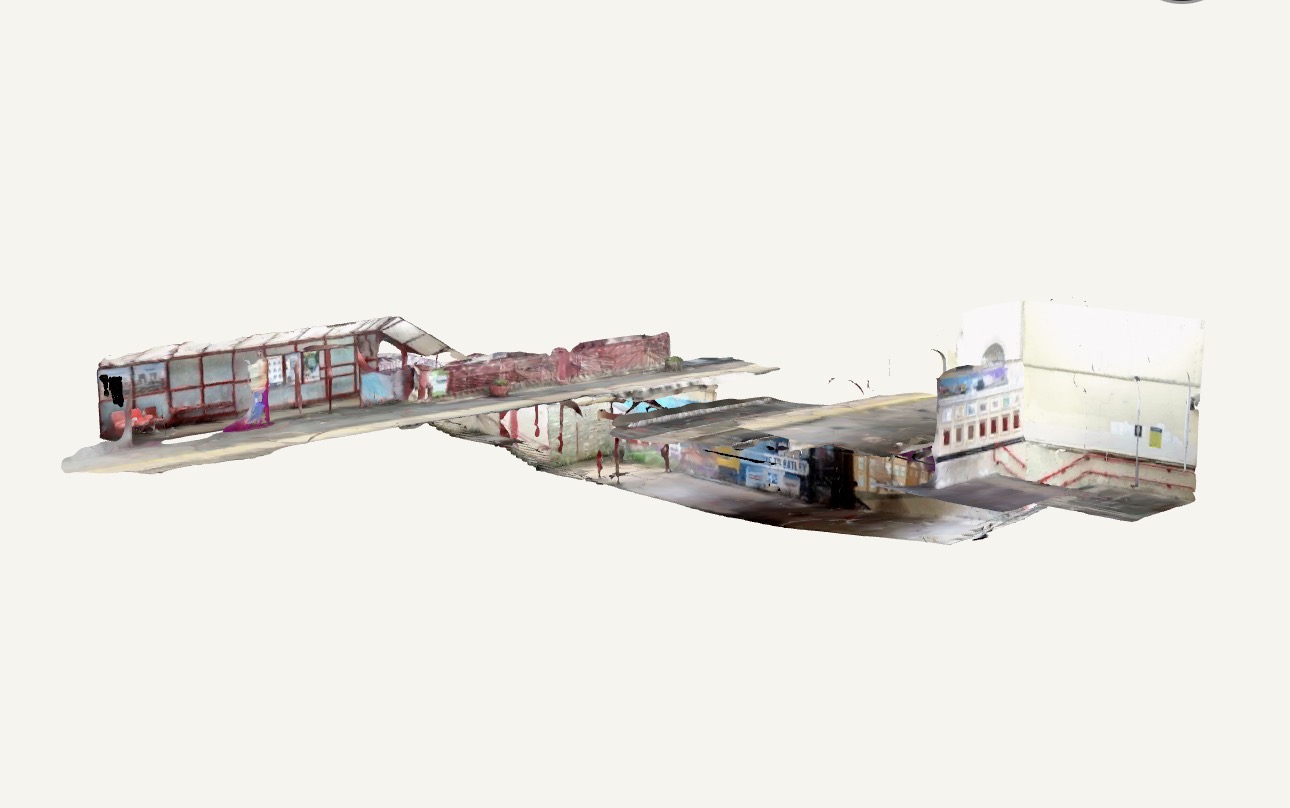
Batley Station Subway
Explore the latest LiDAR capture of the Subway at Batley Railway Station on the day it closed.
View scanThe Future
Proposed service patterns on the TRU corridor following completion of the upgrade. Each coloured line represents one hourly service. Does not include a path through Wakefield Kirkgate to York or any freight paths.
Decoding the timetable: what the new TRU rolling stock diagram actually tells us
Anyone who’s spent time deep in TRU planning documents will recognise the graphic doing the rounds at the moment: a simplified route map of the whole Manchester–Huddersfield–Leeds–York corridor, colour-coded by service group, with a table above it setting out the “rolling stock proposed assumption” for each. It’s a useful snapshot of how Network Rail, Northern and TransPennine Express are currently thinking about who runs what, and on what trains, once the upgrade is finished. Here’s what it shows, and just as importantly, where the gaps and assumptions are.
The three service groups
The table splits the hourly pattern across the upgraded route into three groups:
- 2 stoppers per hour, shown in orange, assumed to be “resourced by NTL new fleet.” NTL is Northern Trains Limited, so this line is telling us the local, all-stations service is expected to run on Northern’s future rolling stock, not anything currently in traffic.
- 4 fasts per hour, shown in blue and green, split two and two. Two paths are assumed to continue using the existing Class 802 fleet (TransPennine Express’s Nova 1 sets), and two are assumed to use “new trains” that don’t exist yet.
- 2 semi-fasts per hour, shown in red, both assumed to run on new trains.
The note at the bottom, “excludes freight paths,” is a reminder that this is a passenger capacity picture only. TRU’s freight enhancements (extra paths, wider gauge clearance) sit outside this diagram entirely.
On the map itself, the same colour logic is applied to the whole network: the blue/green fast corridor runs from Liverpool Lime Street and Manchester Victoria across the Pennines to Huddersfield, Leeds and on to York, with branches continuing to Newcastle, Middlesbrough/Saltburn and Scarborough. The orange stopper pattern threads through Stalybridge, Marsden, Slaithwaite, Huddersfield and the local Dewsbury/Batley/Morley stations into Leeds, with a separate loop serving Manchester Piccadilly, Oxford Road and the Airport. The red semi-fast line extends the corridor east from Leeds through Selby to Hull.
Now confirmed: the actual service pattern, from TPE’s own Managing Director
This is where the diagram stops being a well-informed guess and becomes something closer to confirmed. TPE Managing Director Chris Jackson set out the operator’s likely Huddersfield service pattern for once Network Rail finishes remodelling the station (expected to give it four through platforms and two bays) at a stakeholder meeting in Manchester in late January 2026, as reported by RAIL’s Philip Haigh. From the west, the plan is:
- 2tph from Liverpool Lime Street via Manchester Victoria, splitting to Newcastle and Scarborough
- 2tph from Manchester Airport via Manchester Victoria, splitting to Newcastle and Saltburn
- 2tph from Manchester Piccadilly to Hull, running semi-fast
- 2tph of stoppers, Piccadilly to Huddersfield and Huddersfield to Leeds, operated by Northern
That’s six fast/semi-fast paths plus two stoppers through Huddersfield each hour, which lines up exactly with the diagram’s “4 fasts,” “2 semi-fasts” and “2 stoppers” split. And it directly confirms, from TPE’s own managing director, that the stopping service is a Northern working, not TPE’s, which is exactly what the “resourced by NTL new fleet” note in the diagram was pointing at. One caveat worth carrying forward: Jackson told Haigh the second hourly stopper depends on how much freight take-up there is for the paths, so it isn’t fully locked in.
On the disruption those stoppers and everything else will have to run through, Jackson pushed back on how it’s often characterised:
“I think we’re too quick to say that the railway is closed.”
The wider fleet context still applies here: Northern’s own procurement, potentially covering up to 450 vehicles, has its first phase built around replacing the oldest Sprinter-family units (Class 150, 155 and 156) alongside a batch of new three-car electric units for local stopping services once TRU electrification is complete. Alstom, CAF, Hitachi, Siemens and Stadler were all invited to negotiate, tender returns went in earlier this year, and Northern is aiming for a contract award later in 2026 with first deliveries by 2030. New stopper units at Huddersfield are a turn-of-the-decade prospect rather than an imminent one.
Light maintenance for that stopper fleet fits neatly with Hillhouse Sidings, which is already real and already open. Northern’s £46m Hillhouse Light Maintenance Depot began operating from the historic sidings site in 2025, initially working on diesel units across two of its five lines, with the remaining three brought into use as electric and bi-mode stock arrives.
The missing service, and where the Class 185s actually stand
Here’s the genuinely unresolved piece, and it’s more nuanced than “confirmed to continue” or “confirmed withdrawn.” Jackson’s service pattern above has no room for today’s Manchester to York service via Wakefield Kirkgate and Castleford, the one currently worked by Class 185s, calling at all stations. According to Haigh, that service is, in Jackson’s own words, in limbo: not ruled in, but not ruled out either.
Its fate is tied to a specific piece of infrastructure: the flying junction Network Rail is building at Ravensthorpe, which will carry Leeds and Wakefield services onto a four-track section through Mirfield to Heaton Lodge Junction, where trains split for Huddersfield and Hebden Bridge. That junction work, through what Network Rail calls the “Eye of the Needle,” including a new stretch of railway with bridges over the Calder and Hebble, is scheduled to come together in a 37-day blockade planned for May to June 2027. Only once that’s done will there be clarity on whether the York to Wakefield Kirkgate to Castleford to Manchester stopper survives, in what form, and who runs it.
On the 185s themselves: the fleet turns 20 this March, and Haigh reports it’s currently struggling with reliability, particularly around wheelset supply. TPE is promising the units their first deep clean in a decade, alongside £5.2 million earmarked for long-term reliability improvements. That reads as an operator investing in getting more life out of an ageing fleet it still needs, rather than one about to retire it. So while the diagram’s implication, that new stopper trains eventually take over Huddersfield-area local services from the 185s, still looks directionally right, exactly when and on which specific service remains open.
TransPennine Express: the fasts and semi-fasts
The “existing 802s” reference in the diagram’s fasts row is straightforward: TPE’s Nova 1 bi-mode fleet, introduced in 2019, continues to anchor intercity services across the North and into Scotland, and Haigh notes the fleet is going into Hitachi’s crack repair programme, with TPE and LNER working together to manage its maintenance suppliers.
The “assumed new trains” covering the other fast and semi-fast paths point to TPE’s live rolling stock competition. TPE issued invitations to negotiate to five shortlisted manufacturers in 2024, seeking up to 55 new 195-metre trains with a core firm order of 29. That procurement is in its later stages, with a decision on the preferred bidder expected in summer 2026. Earlier reporting suggested new TPE trains are most likely to appear first on Hull to Manchester Piccadilly workings and on two of the four hourly Manchester Victoria services, which fits neatly with the semi-fast Hull path and half of the fast paths in Jackson’s pattern above.
What to watch for next
- March 2026: Class 185 fleet reaches its 20th anniversary in service; deep clean and £5.2m reliability programme due.
- Summer 2026: expected decision on TPE’s preferred bidder for the new fast/semi-fast fleet.
- Later 2026: expected contract award for Northern’s Phase 1 fleet, covering the 150/155/156 replacement and new stopper EMUs.
- May to June 2027: planned 37-day blockade to complete the Ravensthorpe flying junction and Heaton Lodge remodelling, which should finally settle the fate of the York to Wakefield Kirkgate to Castleford stopper.
- From 2027: new four-platform, two-bay Huddersfield layout enables the six fast/semi-fast plus two stopper pattern Jackson outlined.
- From 2030: Northern’s first new trains expected in service, phased in as the oldest units are withdrawn.
Both fleet procurements are still subject to business case approval, and TPE’s managers themselves have said the Huddersfield service pattern above isn’t yet a done deal. Treat the diagram, and everything above, as the clearest current picture rather than a locked-in outcome.
Sources
- Philip Haigh, RAIL magazine, “TransPennine Express prepares to meet a series of challenges” (comment, late Feb 2026), reporting Chris Jackson’s remarks to TPE’s January 2026 stakeholder meeting
- RAIL magazine, TransPennine Express gives details on new train fleet and expected operations (Feb 2026)
- DfTO Newsroom, Train operators in public ownership drive forward passenger improvements with major fleet investments (Dec 2025)
- Rail Business UK, Five in the running to supply new TransPennine Express fleet (Sept 2024)
- RollingStockWorld, Latest passenger rolling stock procurements and supplies (Jan 2026)
- Northern, Northern’s new trains (northernrailway.co.uk)
- Railway Gazette / Rail Business UK, Five manufacturers invited to bid for Northern Trains fleet renewal contracts
- Northern / RailBusinessDaily, New £46 million facility opens at Hillhouse, Huddersfield
- bidstats.uk, Additional Rolling Stock for TransPennine Express (TPE), tender notice 2022
About
I’m Tim, a digital content creator producing videos, writing articles and developing digital models of infrastructure of the Transpennine Route Upgrade — the biggest transformation of the railway between Manchester, Huddersfield, Leeds, and York in a generation. I’m based right here in Huddersfield, which means I’m not just reporting on this project, I’m watching it change my own backyard.
My background is in the cinema industry as a technical engineer, and that technical grounding shapes how I cover TRU. I care about getting the engineering right, not just making things look good from the air. Whether it’s precast deck slabs going in on the Baker Viaduct or a 28 day blockade at Bradley Junction, I try to explain what’s actually happening and why it matters — clearly, accurately, and without the jargon getting in the way.
I’m not affiliated with Network Rail, TransPennine Express, or any contractor on this project. No one’s paying me to say things are going well, and no one’s stopping me from saying when they’re not. That independence is the whole point. All views and opinions are my own, and you’re getting a straight, factual account of one of the most ambitious rail projects in the country, from someone who genuinely finds it fascinating.